Why Marine Reliability Is Becoming More Complex
Torben Andersen
7 min
3 August 2026
Shipping is changing. Reliability must change with it.
For decades, marine reliability was largely a question of maintaining proven machinery. Engines, gearboxes and hydraulic systems were expected to operate for years under relatively predictable conditions. Maintenance strategies evolved from decades of operational experience, and engineers knew what worked.
Today, that environment is changing. The maritime industry is navigating one of the biggest transformations in its history.
Alternative fuels are entering the fleet. Crew sizes continue to shrink. Operators are expected to keep vessels available for longer while extending maintenance intervals and reducing operating costs.
Individually, none of these trends is revolutionary. Together, they fundamentally change what reliability means.
The question is no longer simply: "Can the machinery perform?"
It is increasingly: "Can the machinery continue to perform under changing conditions, with fewer people and fewer opportunities for intervention?"
That is where the conversation about reliability begins.
Trend 1: The fuel is changing. Maintenance is changing with it.
The industry's transition towards lower-carbon fuels is well underway. Methanol, LNG, biofuels and ammonia all represent different pathways towards lower emissions. Each offers advantages, but each also introduces new operating conditions and new maintenance questions.
Engine manufacturers continue to develop new technologies, while operators gain practical experience from early deployments. As with any major transition, operational knowledge is still evolving. For engineers responsible for vessel reliability, the important point is not which fuel will ultimately dominate. It is that maintenance can no longer rely solely on decades of historical experience.
Questions that were once straightforward now require closer attention:
- How do different fuels influence lubricant condition?
- Will operating profiles change?
- Are sampling intervals still appropriate?
- Which parameters should be monitored more closely?
The answers will vary between applications, but one principle remains consistent. As operating conditions become less predictable, understanding the condition of lubricating oil becomes more valuable.
Trend 2: Fewer people are responsible for more systems
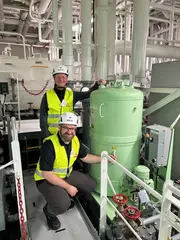
Marine engineering has become increasingly efficient. Modern vessels often operate with significantly smaller engine-room teams than previous generations. Automation has reduced routine workload. Remote diagnostics provide additional support. Digital systems generate more information than ever before.
But none of these developments eliminate maintenance. Instead, they increase the importance of making the right maintenance decisions.
When fewer engineers are responsible for more equipment, there is less time for reactive work. Maintenance increasingly depends on identifying developing problems before they become failures. That requires confidence in the information available.
Oil condition is one of the clearest indicators of what is happening inside critical machinery. Contamination, wear particles and degradation products often provide early evidence of developing problems long before a component fails. For smaller engineering teams, this information becomes increasingly valuable because it helps prioritise maintenance where it matters most.
Trend 3: Every hour of uptime has become more valuable
Commercial pressure on vessel availability continues to increase. Port schedules are tighter. Supply chains operate with less flexibility. Off-hire costs remain significant. Maintenance windows are carefully planned. Every unplanned stop has consequences that extend beyond the machinery itself.
At the same time, operators continue looking for opportunities to extend oil life, optimise maintenance intervals and maximise equipment utilisation. This shifts maintenance away from fixed schedules towards condition-based decisions.
Rather than asking "Has it been six months?" - operators increasingly ask "What is the condition of the system today?" Reliable answers require reliable information. That includes vibration analysis, temperature monitoring, condition monitoring, and understanding the condition of the lubricating oil protecting the machinery.
What these trends have in common
Alternative fuels. Smaller crews. Higher uptime expectations. At first glance they appear unrelated. In reality, they all reduce the margin for error. There is less operational redundancy. Less time for reactive maintenance. Greater dependence on condition information. Greater consequences when failures occur.
This is why reliability is increasingly about prevention rather than repair. The most successful operators will not necessarily be those with the newest equipment. They will be those who understand the condition of their critical systems and act before small problems become major failures.
Where lubricating oil fits
Lubricating oil is often viewed simply as a consumable. In reality, it is an essential part of a vessel's reliability strategy. Every critical rotating component depends on oil to reduce friction, transfer heat and protect surfaces from wear. When that oil becomes contaminated or degraded, the machinery continues to operate - but no longer under the conditions it was designed for. Particles accelerate wear. Water promotes corrosion. Oxidation shortens oil life. These are well-understood mechanisms. What is changing is the environment in which they occur.
Longer maintenance intervals mean contamination has more time to accumulate. Smaller crews mean fewer opportunities for routine inspection. Higher uptime expectations increase the cost of every avoidable failure. As shipping evolves, clean lubricating oil becomes more than a maintenance objective. It becomes one of the foundations of dependable operation.

Looking ahead
Shipping will continue to evolve. New fuels will mature. Digital technologies will improve. Automation will increase. But the objective remains unchanged. Operators need vessels that are safe, available and reliable. Achieving that will depend on understanding not only the machinery itself, but also the systems that protect it.
Lubricating oil is one of those systems. As the maritime industry enters its next chapter, keeping oil clean is not becoming less important. It is becoming more critical than ever.
About the author
Torben Andersen is a marine and offshore specialist at C.C.JENSEN, with extensive experience in lubrication system reliability across vessel types and operating environments. C.C.JENSEN will be present at SMM Hamburg 2026 - visit us to discuss the reliability challenges facing your fleet.
Stay updated with our latest articles
Get new insights, industry knowledge, and updates from C.C.JENSEN directly in your inbox.

