
Reliable Turbine Performance Starts With Clean Turbine Lube Oil
Steam and gas turbines depend on stable lubrication to protect bearings, shafts, gears, and control systems under continuous load. Their lube oil systems operate with high oil volumes, long residence times, and constant exposure to air and humidity. Over time, water from condensation or steam ingress, particles released from bearings and gears, and oxidation residues from high operating temperatures all accumulate in the oil. Even small increases in water or ISO particle levels can weaken the lubrication film, raise bearing temperatures, and disturb the hydraulic stability of the control system.
In steam turbines, moisture and temperature cycling accelerate water ingress and oxidation, increasing the likelihood of corrosion and varnish formation. In gas turbines, high thermal stress promotes rapid additive breakdown and varnish deposits in servo valves and bearings. Across both turbine types, the result is the same: unstable oil condition, more alarms from the lube system, and a higher risk of forced outages.
Inline filters cannot remove oxidation residues or fine particles, and oil changes only offer a temporary reset. As soon as the turbine restarts, new contamination is generated. Over time, this leads to increased wear rates and reduced confidence in the lubrication system’s ability to support safe, reliable operation.
CJC® Offline Filtration works in a separate circuit to continuously remove particles, water, and sludge from turbine lube oil without disturbing system pressure. The depth filter captures oxidation products and varnish precursors, helping the oil remain chemically and mechanically stable over long periods. This results in consistent bearing temperatures, smoother servo-valve response, and a slower progression of mechanical wear.
For both steam and gas turbine operators, clean lube oil is a key factor in maintaining high availability and avoiding costly lubrication-related trips.
Why Turbine Lube Oil Deteriorates, and Why It Matters
Steam and gas turbines operate under different conditions, but both expose lube oil to contamination that cannot be prevented by design alone.

Water ingress in steam turbines increases bearing risk
Steam leakage and condensation introduce water that weakens the lubrication film, increases corrosion, and raises the likelihood of bearing temperature deviations.
Thermal stress in gas turbines accelerates oxidation
High oil temperatures break down additives and generate oxidation residues that trigger sludge formation, varnish, and control instability.
Particles accumulate and drive wear across both turbine types
Wear metals, rust, and airborne debris stay in circulation, increasing abrasion on bearings, pumps, and servo mechanisms.
Oxidation residues disturb control stability
Varnish precursors deposit on valve surfaces and internal passages, leading to sticking servo valves, sluggish response, and more control-related alarms
Centrifugal Separator
|
CJC® Filtration
| |
|---|---|---|
Energy Consumption
|
High (heating + rotating bowl)
|
Low (3% compared to Centrifuge)
|
Maintenance
|
Daily supervision required
|
Minimal, periodic filter change
|
Waste Generation
|
Several tonnes of sludge annually
|
Dry filter element only
|
Heating |
Required | None require |
CO₂ Impact
|
High (energy intensive)
|
Low (97% reduction)
|
Compliance |
Adds to CII |
Up to 2% CII improvement |
How it works
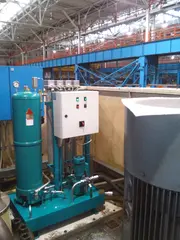
CJC® Offline Filters work in a separate circuit, continuously conditioning the oil without affecting system pressure or turbine operation.
Outcome for maintenance teams
Lower bearing risk
Clean oil reduces oxidation and removes wear particles that damage bearings. This helps prevent trips, stabilizes operation, and extends the time between oil changes
Longer oil life
Removing fine contaminants slows oxidation and thermal degradation, extending oil life by 2–5× in documented turbine cases. This supports stable operation between service intervals.
More predictable valve performance
Consistently clean oil minimizes friction, sticking and varnish buildup. This ensures smoother valve movement and reduces control deviations over time.
Higher availability
Clean oil reduces corrective maintenance, extends component life and minimizes repair tasks. Your team spends less time reacting -and more time planning - while operating costs stay lower
Why Turbine Lube Oil Deteriorates, and Why It Matters
Steam and gas turbines operate under different conditions, but both expose lube oil to contamination that cannot be prevented by design alone.

Water ingress in steam turbines increases bearing risk
Steam leakage and condensation introduce water that weakens the lubrication film, increases corrosion, and raises the likelihood of bearing temperature deviations.

Thermal stress in gas turbines accelerates oxidation

Particles accumulate and drive wear across both turbine types

Oxidation residues disturb control stability
Once the lubrication system becomes chemically unstable, operators face more unplanned maintenance, higher oil consumption, and increased risk of a lube-oil-related trip.
Clean and dry oil significantly reduces this risk, extending oil life and improving component reliability.
How CJC® Offline Filtration Stabilizes Turbine Lube Oil
How the Offline Principle Works

Key Turbine Systems That Depend on Clean Lube Oil

Main Bearings
Challenge: Water ingress and fine wear particles reduce film strength and increase bearing temperature
Result: Stable ISO cleanliness, lower water content, and more consistent bearing temperatures.

Thrust Bearings
Challenge: High axial loads make these bearings sensitive to both water and oxidation residues.
Result: Cleaner oil improves load-carrying capability and reduces the risk of accelerated wear.

Control Oil / Servo Valve Circuits
Challenge: Oxidation residues and varnish cause sticking valves and slow actuator response.
Result: Fewer control alarms, smoother valve movement, and more predictable turbine regulation.

Turning Gear / Auxiliary Gear Systems
Challenge: Wear particles and moisture accumulate during frequent starts and stops.
Result: Reduced abrasion and more stable gear operation over long lubrication intervals.
Documented Performance in Real Turbine Systems
Varnish Reduction in Gas Turbine Lube Oil
A combined-cycle plant operating a GE 9FA turbine saw its lube oil MPC drop from 44 to 8 in six months using a CJC® VRU.
This restored stable valve behaviour and prevented a costly oil change.
Cleaner Control Oil for Reliable Servo Valve Response
Hydraulic control systems exposed to oxidation residues and small tolerances benefit from CJC® filtration.
Case documentation shows reduced sticking valves and more predictable control system performance.
Clean, Dry Oil in Steam Turbine Lube Systems
Multiple steam turbine installations document effective water removal and long filter insert life.
Plants reported fewer lubrication-related alarms and improved operational stability.
Long-Term Oil Life Extension Across Power Applications
CJC® depth filtration has extended oil life by a factor of 3–4 in comparable power-plant lubrication systems by removing particles, water and oxidation byproducts.
This reduces maintenance hours and supports higher turbine availability.
Improve Turbine Reliability With Clean Lube Oil
Clean turbine lube oil reduces wear, stabilises bearings, and prevents control-related trips.
No obligation. We start with an oil condition review to identify your improvement potential.
Turbine lube oil
Reliable turbine performance starts with clean turbine lube oil
Steam and gas turbines rely on stable lube oil to protect bearings, gears, and control systems under continuous load. Over time, water, particles, and oxidation by-products accumulate in the oil, weakening the lubrication film and affecting control stability. Inline filters and oil changes alone cannot control this ongoing contamination.
Continuous offline filtration removes water, particles, and sludge without disturbing system operation, helping maintain stable oil condition, reliable control response, and consistent turbine performance. Clean lube oil supports higher availability and reduces the risk of lubrication-related trips.
Why turbine lube oil becomes a reliability risk
Steam and gas turbines operate under different conditions, but both expose lube oil to contamination that cannot be prevented by design alone.

Water ingress raises bearing risk
Steam leakage and condensation introduce water that weakens the lubrication film, increases corrosion, and raises the likelihood of bearing temperature deviations.

Thermal stress accelerates oxidation
High oil temperatures break down additives and generate oxidation residues that trigger sludge formation, varnish, and control instability.

Particle build-up accelerates wear
Wear metals, rust, and airborne debris stay in circulation, increasing abrasion on bearings, pumps, and servo mechanisms.

Oxidation disrupts control stability
Varnish precursors deposit on valve surfaces and internal passages, leading to sticking servo valves, sluggish response, and more control-related alarms.
Centrifugal Separator
|
CJC® Filtration
| |
|---|---|---|
Energy Consumption
|
High (heating + rotating bowl)
|
Low (3% compared to Centrifuge)
|
Maintenance
|
Daily supervision required
|
Minimal, periodic filter change
|
Waste Generation
|
Several tonnes of sludge annually
|
Dry filter element only
|
Heating |
Required | None require |
CO₂ Impact
|
High (energy intensive)
|
Low (97% reduction)
|
Compliance |
Adds to CII |
Up to 2% CII improvement |
How it works: Turbine lube oil
Outcome for maintenance teams

Lower bearing risk
Clean oil reduces oxidation and removes wear particles that damage bearings. This helps prevent trips, stabilizes operation, and extends the time between oil changes

Longer oil life
fine contaminants slows oxidation and thermal degradation, extending oil life by 2–5× in documented turbine cases. This supports stable operation between service intervals.

More predictable valve performance
Consistently clean oil minimizes friction, sticking and varnish buildup. This ensures smoother valve movement and reduces control deviations over time.

Higher availability
Clean oil reduces corrective maintenance, extends component life and minimizes repair tasks. Your team spends less time reacting -and more time planning - while operating costs stay lower
Key turbine systems that depend on clean lube oil
Main bearings
Challenge: Water ingress and fine wear particles reduce film strength and increase bearing temperature.
Result: Stable ISO cleanliness, lower water content, and more consistent bearing temperatures.
Thrust bearings
Challenge: High axial loads make these bearings sensitive to both water and oxidation residues.
Result: Cleaner oil improves load-carrying capability and reduces the risk of accelerated wear.
Control oil / servo valve circuits
Challenge: Oxidation residues and varnish cause sticking valves and slow actuator response.
Result: Fewer control alarms, smoother valve movement, and more predictable turbine regulation.
Turning gear / auxiliary gear systems
Challenge: Wear particles and moisture accumulate during frequent starts and stops.
Result: Reduced abrasion and more stable gear operation over long lubrication intervals.
Clean Oil Is Not a Recommendation.
It Is a Reliability Strategy.
Understand contamination mechanisms, ISO codes, water control, and how to extend oil and component lifetime.

Documented performance in real turbine systems

Varnish reduction in gas turbine lube oil
A combined-cycle plant operating a GE 9FA turbine saw its lube oil MPC drop from 44 to 8 in six months using a CJC® VRU.
This restored stable valve behaviour and prevented a costly oil change.

Cleaner control oil for reliable servo valve response
Hydraulic control systems exposed to oxidation residues and small tolerances benefit from CJC® filtration.
Case documentation shows reduced sticking valves and more predictable control system performance.
Clean, dry oil in steam turbine lube systems
Multiple steam turbine installations document effective water removal and long filter insert life.
Plants reported fewer lubrication-related alarms and improved operational stability.

Long-term oil life extension across power applications
CJC® depth filtration has extended oil life by a factor of 3–4 in comparable power-plant lubrication systems by removing particles, water and oxidation byproducts.
This reduces maintenance hours and supports higher turbine availability.
Improve Gearbox Reliability with Clean Oil
Clean gear oil is one of the easiest and most cost-effective ways to extend gearbox life, reduce downtime and keep operations running predictably. Start with an oil condition review and a practical filtration strategy tailored to your system.
No obligation, we start with a condition review and clear recommendations.