EVALUATION GUIDE
How to Evaluate Oil Filtration
Choosing the right oil filtration solution is not only a question of selecting a product.
The right recommendation depends on your oil system, oil type, oil volume, flow, contamination challenge, operating conditions and maintenance goals. This guide helps you understand the technical factors behind oil filtration, so you can evaluate the right approach and prepare the information needed for a qualified recommendation.
At C.C.JENSEN, we do not expect customers to select the exact filtration unit or filter insert alone. Our specialists use application data to recommend the right combination of CJC® filtration system and filter insert for each operating environment.
Start with the contamination problem
Before selecting a filtration solution, it is important to understand what is affecting the oil and the machine.
Oil contamination is not always visible. Small particles, water, oxidation residues, varnish and acidity can all reduce oil performance, increase wear and shorten component life as well as in-service-life of lubricants.
Typical oil contamination challenges include:
- Fine particles that cause wear and damage to components
- Water that reduces lubrication performance and accelerates degradation
- Oxidation residues, sludge and varnish that affect system reliability
- Acidity that can damage oil and system components
- Mixed contamination where several problems appear at the same time
The correct filtration approach depends on which contamination challenge is present, how severe it is and how the oil system operates.
Understand how offline oil filtration works
CJC® filtration units are typically installed as offline filtration systems also referred to as a kidney loop. This means the filtration unit operates in a separate circuit, continuously cleaning the oil without interrupting machine operation.
Offline filtration is designed to keep oil clean over time. Instead of only protecting the machine from large particles in the main flow, offline filtration removes fine particles and degradation products that can remain in circulation and build up inside the oil system.
This approach is especially relevant for systems where oil cleanliness, reliability and long component lifetime are important.
Offline oil filtration can help support:
- Cleaner oil over time
- Reduced wear from fine particles
- Improved system reliability
- Extended oil lifetime
- Reduced risk of unplanned maintenance
- More stable and efficient operating conditions
Understand the filtration principle
Not all filtration technologies work in the same way.
CJC® filter inserts are based on depth filtration. Instead of only capturing contamination on the surface or in a thin membrane, depth filtration allows oil to pass through a filter medium where contamination is retained throughout the depth of the insert.
This gives the filter insert a high contamination holding capacity and makes it suitable for removing fine particles, water and oil degradation products from oil systems.
Key filtration factors to understand include:
- Filtration degree
- Dirt-holding capacity
- Oil type compatibility
- Water absorption or separation needs
- Viscosity and temperature
- Flow requirements for the filtration unit (circulation ratio)
- The type and amount of contamination in the oil and the ingress rate
The filter insert type is a critical part of the filtration performance and must be selected based on the application.
Know what affects the recommendation
A correct oil filtration recommendation depends on several technical parameters. These parameters help determine the right filtration unit, capacity and filter insert combination. The most important input data normally includes:
Oil type
Different oils behave differently. Hydraulic oil, gear oil, turbine oil, lube oil, transformer oil, diesel, quench oil, phosphate ester fluids and biodegradable oils may require different filtration considerations.
Oil volume
The total oil volume helps determine the required flow rate, filtration capacity and how quickly the oil can be cleaned.
System flow and operation
Flow, circulation, machine duty cycle and operating pattern affect how the filtration system should be sized and installed.
Contamination challenge
The recommendation depends on whether the main issue is fine particles, water, varnish, sludge, acidity or a combination of problems.
Viscosity and temperature
Oil viscosity and operating temperature affect how the oil moves through the filtration system and how the solution should be configured e.g. if a pre-heater is needed.
Application and environment
A wind turbine gearbox, marine engine, hydraulic press, mining crusher or power plant turbine will not have the same operating conditions, rate of ingress or maintenance priorities.
Cleanliness target
The desired oil cleanliness level helps define the expected performance and the right filtration approach.
Understand the product families
C.C.JENSEN solutions are grouped by the contamination problems they solve. The product family gives a starting point, but the exact system and insert configuration should be selected based on application data.
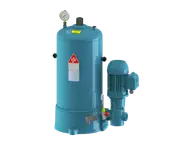
Fine Filter Units
Used to remove fine particles, oxidation residues and other solid contamination from oil systems. Typically used where clean oil is important for component lifetime, uptime and stable operation.
Learn More
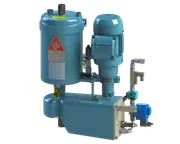
Water Removal Units
Used when the main challenge is free, emulsified or dissolved water, depending on the application and oil type.
Learn More
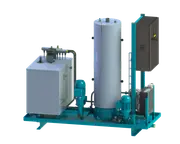
Varnish Removal Units
Used where oil degradation products need to be controlled or removed, addressing deposits, sticking valves and operational instability.
Learn More
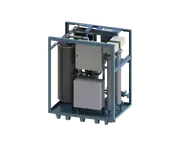
Acidity Removal
Relevant in applications where acid development must be controlled to protect oil performance and equipment reliability.
Learn More
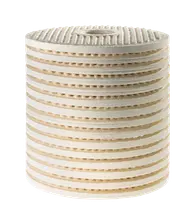
Filter Inserts
The filter insert determines much of the filtration performance. The right insert depends on the unit type, oil type, contamination challenge and operating conditions.
Learn More
How the right filter insert is selected
Filter inserts should not be selected only by price. The correct insert depends on the oil system requirements, how the system operates and which contamination should be addressed.
The selection normally considers:
- Whether the main challenge is particles, water, varnish, acidity or mixed contamination
- The oil type and its ability to readily separate water
- The filtration unit type
- The contamination load and ingression rate
- The expected service interval
- The operating temperature and viscosity
- The application and cleanliness target
For example, one application may require ultra-fine particle removal, while another may need water separation or varnish control. In many cases, the best recommendation is based on a combination of used oil analysis, system data and operating experience.
Prepare your system data
To receive a useful technical recommendation, it helps to prepare the right information before contacting C.C.JENSEN.
Useful information includes:
- Machine, application and environment
- Oil type and oil brand
- Total oil volume
- Current oil cleanliness level
- Target cleanliness level
- Known contamination problem
- Water content and separation ability (demulsibility), if available
- Viscosity (ISO VG) and operating temperature
- Current filtration setup
- Available installation space
- Operating hours and maintenance interval
- Recent oil analysis report, if available
You do not need to have all information ready before contacting us. But the more system data you can provide, the more accurate the recommendation can be.
From technical evaluation to recommendation
The purpose of this guide is to help you understand the technical factors behind oil filtration.
The final recommendation should still be based on your actual application data. C.C.JENSEN specialists use technical input such as oil volume, oil type, flow, contamination type and operating conditions to recommend the right CJC® filtration system and filter insert combination.
This approach helps ensure that the solution is matched to the real operating conditions rather than selected from a generic product list.
Request a technical recommendation
Need help evaluating the right filtration solution? Send us your system information, oil type, oil volume and contamination challenge. Our specialists will help assess the application and recommend the right CJC® solution.
Related technical content
Continue your evaluation with these topics:
