How a Filter Removes Bacteria from Diesel - Without Chemicals
Dennis Vestergaard
5 min
6 May 2026
Bacteria in diesel are tiny enough to slip through most traditional filters. The solution isn't biocides or magnetic systems - it's the natural polarity of cellulose. This article explains the "magnet effect" that traps bacteria and simplifies diesel tank maintenance.
The Bacteria Challenge in Diesel Tanks
Microbial contamination - bacteria and fungi - is one of the most underestimated problems in diesel fuel management. Bacteria thrive at the water-fuel interface in storage tanks, feeding on hydrocarbons and producing acidic metabolic by-products that raise the fuel's acid number, corrode tank walls and fuel system components, and generate biomass that plugs filters and fuel injectors.
The challenge is that bacteria are extremely small - typically 0.5-2 micrometres in size. Most conventional fuel filters, which are designed to remove particles in the 2-10 micrometre range, allow bacteria to pass straight through.
The Traditional (and Expensive) Solutions
The conventional approach to diesel bacteria control involves either biocide treatment - adding chemical bactericides to the fuel - or complex physical systems such as UV sterilisation or magnetic treatment units in the pursued to kill of bacterial and fungi colonies.
Both approaches have significant drawbacks. Biocides add cost and complexity to fuel management, require careful dosing to be effective without damaging fuel system components, and create a disposal challenge for the treated fuel. UV and magnetic systems require significant capital investment and ongoing maintenance.
Dead bacteria and fungi settle at the bottom of the tank, creating an ideal environment for new microbial growth. Over time, this dead biomass forms a natural protective layer that shields new bacteria and fungi, reducing the effectiveness of biocides and physical treatment systems such as UV sterilisation or magnetic treatment units.
The Secret of Cellulose: Polar Attraction
Cellulose fibres - the material used in CJC filter inserts - have a natural electrical polarity. This polarity arises from the chemical structure of cellulose, which contains numerous hydroxyl (-OH) groups that give the fibre surface a slight negative charge.
The bacterial cell membrane carries a slight positive charge. When bacteria-contaminated diesel passes through a cellulose filter, the negatively charged cellulose fibres attract and capture the positively charged bacterial cells - like a magnet. The bacteria are physically trapped within the filter media and removed from the fuel stream.
- This mechanism is entirely passive - it requires no chemicals, no power input, and no special operating conditions. It occurs automatically as fuel flows through the filter at the correct flow rate, and it is effective against a wide range of bacterial and fungal species.
Simpler Maintenance, Better Outcomes
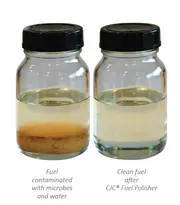
For data center facility managers, the practical implication is significant. A single cellulose filtration system running at low, continuous flow removes bacteria from diesel fuel - replacing what would otherwise require chemicals or maintenance heavy equipment.
The spent filter insert, containing the captured bacteria, is simply disposed of at the next service interval. No chemical handling, no specialist contractors required.
Stay updated with our latest articles
Get new insights, industry knowledge, and updates from C.C.JENSEN directly in your inbox.

