The Hidden Dangers of Water in Hydraulic and Lubrication Oils
Steffen D. Nyman
8 min
18 February 2026
Even traces of water in oil - as little as 0.05% - can trigger corrosion, micro-pitting, and accelerate oil degradation/oxidation in hydraulic and lubrication systems. This article explains the three states of water contamination and the damage each one causes.
Three States of Water Contamination
Water in oil does not always announce itself with visible cloudiness or readily separated water. It exists in three distinct states, each with different implications for system health:
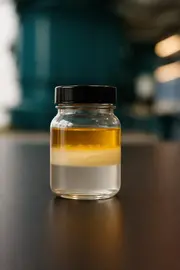
- Dissolved water: Water molecules dispersed uniformly within the oil at the molecular level. At concentrations below the oil’s saturation point, dissolved water is invisible and may not immediately cause damage - but it promotes additive depletion and acts as a catalyst to oil degradation and varnish formation.
- Emulsified water: Tiny water droplets suspended in the oil, typically appearing as a milky or hazy discolouration. Emulsified water is far more aggressive than dissolved water. It disrupts the oil film, promotes pitting, corrosion, additive depletion and accelerates oxidation.
- Free water: Water that has separated from the oil and settles at the bottom of reservoirs, sumps and housings. Free water is the most visible and most immediately damaging form - it creates a corrosive environment on metal surfaces and provides an ideal breeding ground for microbial growth. Free water also washes out additives from the oil.
How Water Destroys Oil Film Integrity
The primary function of a lubricant is to maintain a thin fluid film between moving surfaces. Water - even in emulsified form - disrupts this film in two ways.
First, water droplets do not provide lubrication but occupies space in the oil film and implode causing pitting. Second, water accelerates the breakdown or depletion of the oil's additive package, particularly anti-wear and anti-corrosion additives, reducing the oil's ability to protect metal wetted surfaces.
Studies on rolling element bearings have shown that water contamination can significantly reduce useful bearing life. Even small amount of water is enough to initiate micro-pitting and accelerated surface fatigue. Already at 0.1 percent water in oil the bearing will have lost 75 percent of it’s useful life.
Corrosion and Micro-Pitting
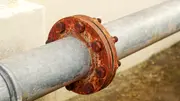
Steel surfaces in hydraulic and lubrication systems are highly susceptible to corrosion in the presence of water. The mechanism is straightforward: water reacts with iron to form iron oxides (rust), which are abrasive particles that then circulate through the system, compounding the contamination problem.
In high-load contact zones such as bearings and gears with hardened surfaces, water contamination promotes a specific failure mode called micro-pitting - a surface fatigue phenomenon characterised by the formation of tiny craters on contact surfaces. Micro-pitting progressively roughens the surface, increases friction and heat generation, and ultimately leads to spalling and component failure.
Water Ingress Pathways
Identifying and eliminating water ingress pathways is as important as removing water once it has entered the system.
Common ingress routes include condensation from temperature cycling, contaminated make-up oil, wash-down water entering through breathers or damaged seals, and seawater ingress in submersed oil systems e.g. marine stern tubes and thrusters.
Removal Technologies
The appropriate water removal technology depends on the concentration and state of water contamination.
Small amounts of dissolved and emulsified water can be removed by absorption filter inserts, while continuous ingress requires vacuum dehydration or desorber-technologies, which are both highly effective. For free water and large water ingress, coalescing filters are the preferred solution.
Stay updated with our latest articles
Get new insights, industry knowledge, and updates from C.C.JENSEN directly in your inbox.

