
Free, Emulsified, or Dissolved? Understanding the Water in Your Diesel
Dennis Vestergaard
6 min read
29 April 26
Traditional separators only remove free water, leaving the emulsified water that steals heat from combustion and reduces efficiency. Cellulose absorption removes all three forms of water simultaneously, while eliminating the need for complex wastewater handling.
The Three Types of Water in Diesel
Water in diesel fuel is not a single problem - it is three distinct problems, each requiring a different approach to remove. Understanding the difference between them is the starting point for any effective diesel tank management programme.
- Free water settles at the bottom of the tank. It is visible as a distinct water layer beneath the fuel. Free water is the most immediately damaging form - it creates an ideal environment for microbial growth, causes corrosion of tank walls and fuel system components, and can cause engine fuel starvation if drawn into the fuel supply line.
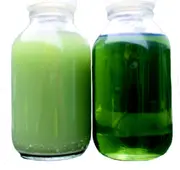
- Emulsified water exists as tiny droplets suspended throughout the fuel, typically appearing as a haze or milky discolouration. It is the most problematic form for combustion efficiency - emulsified water droplets are drawn into the combustion chamber along with the fuel, where they absorb heat during vaporisation and reduce the effective energy content of each injection event.
- Dissolved water is invisible - individual water molecules dispersed at the molecular level within the fuel. While not immediately damaging, dissolved water is a reservoir that feeds the emulsified and free water forms as temperature and pressure conditions change.
Why Separators Fall Short
Traditional centrifugal separators and gravity-based water separators are designed to remove free water, the large, settled water layer at the bottom of the tank. They work by exploiting the density difference between water and diesel.
However, they have very limited effectiveness against emulsified water, where the droplets are too small to settle under gravity or centrifugal force within the residence time of the separator.
Emulsified water steals heat from the combustion process. Every droplet of water that enters the combustion chamber absorbs energy during vaporisation - energy that should be driving the piston. The result is reduced power output, increased fuel consumption, and higher exhaust temperatures.
The Absorption Solution
Cellulose-based depth filter inserts remove all three forms of water through a single mechanism: absorption. As diesel passes through the cellulose media, water molecules - in dissolved, emulsified, or free form - are attracted to the hydrophilic cellulose fibres and absorbed into the media structure. The water is physically retained within the insert until it is replaced at the next service interval.
This approach has a significant practical advantage for data center tank management: it eliminates the need for wastewater collection systems, drain valves, and disposal infrastructure. The water is simply contained within the spent insert and removed with it at service time - a much simpler and cleaner solution than the piping and drain systems required by separator-based approaches.
Sizing for Data Center Applications
For data center diesel tanks, the key sizing parameters are tank volume, expected water ingress rate (primarily from condensation and fuel deliveries), and the required service interval.
A properly sized cellulose filtration system will typically have insert life up to 1 year under normal operating conditions - a simple, predictable maintenance task that can be incorporated into existing facility maintenance schedules.
Stay updated with our latest articles
Get new insights, industry knowledge, and updates from C.C.JENSEN directly in your inbox.

