
Water Removal from Oil
Water removal from oil is critical to maintaining lubrication performance, preventing corrosion, and extending equipment lifetime. Even small amounts of water can cause significant damage if not removed effectively.
Why water removal matters
Water is one of the most harmful and often underestimated oil contaminants. It typically enters oil systems through condensation, leaks, process conditions, or contaminated new oil.
Common sources include:
- Condensation caused by temperature fluctuations
- Ingress through seals, breathers, or coolers
- Water-contaminated oil or fuel
Once inside the system, water circulates continuously and accelerates damage long before it becomes visible.
Failure to remove water can lead to corrosion, reduced lubrication, microbial growth, and costly downtime.
What is water contamination?
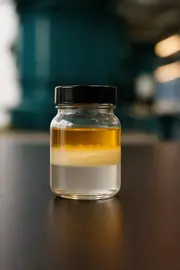
Water can exist in oil in different forms - all of which are damaging:

Free water
visible separation in tanks or reservoirs

Emulsified water
finely dispersed water creating a cloudy appearance
Dissolved water
invisible water held within the oil
Even dissolved water, which cannot be detected visually, can significantly reduce oil performance and shorten equipment lifetime.

Clean Oil Is Not a Recommendation.
It Is a Reliability Strategy.
Understand contamination mechanisms, ISO codes, water control, and how to extend oil and component lifetime.

How water removal from oil works
Water removal is performed using offline (kindney-loop) filtration, operating independently of the main oil flow to continuously remove water during normal operation.

Oil is diverted
A small portion of oil is continuously taken from the system.

Slow filtration
Oil flows slowly through a water-removal unit to allow effective separation.

Water is removed
Free, emulsified, and dissolved water are extracted from the oil.

Clean oil returns
Clean, dry oil is returned to the system without interrupting operation.
Continuous offline operation ensures stable oil condition and long-term system protection.
Desorbers Dehydratores for Water removal in oil
The Desorber dehydration technology is designed to remove all three states of water from oil (dissolved, emulsions and free water), including water that conventional separation methods cannot eliminate.
The Desorber Technology has these main benefits:
- Restore oil properties in oils which have large water ingress – thereby saving the oil
- Removes all three water states from oil – even heavily emulsified oils
- Unaffected by viscosity and additive package
- Will reduce water-in-oil to very low levels (<200 ppm)
- Easy to maintain and operate
Desorbers are particularly effective in systems exposed to constant water ingress and oil types which create high levels of emulsions and dissolve water.
Effects of water in oil
Water contamination can trigger multiple failure mechanisms:
- Reduced lubrication and increased friction
- Accelerated oxidation and oil degradation
- Formation of acids, varnish, and sludge
- Corrosion, rust, and pitting of metal surfaces
- Growth of microorganisms (“diesel bugs”) in oil and fuel systems
If left untreated, these effects significantly reduce oil and equipment lifetime.
Proven technology. Measurable performance.
Benefits of water removal from oil
Preserves lubrication performance
Reduces corrosion and surface damage
Extends oil and component lifetime
Prevents microbial growth
Improves system reliability and uptime
Water removal in practice
Water removal is used across industries where oil reliability is critical, including:
Hydraulic and lubrication systems
Gearboxes and turbines
Engines and fuel systems
Offshore, marine, wind, mining, and industrial applications
How an Oil Filter Works in an Offline Filtration System
Solid Particles and Abrasive Wear:
Solid particles are transported with the oil flow and become trapped between moving metal surfaces. These particles are often similar in size to the clearances inside bearings, pumps, and valves. Once wedged between components, they damage metal surfaces and generate millions of new particles - creating a self-reinforcing wear process.
Oil Degradation and Varnish Formation:
As oil degrades due to heat, pressure, and contamination, oxidation by-products form. These degradation products can dissolve in warm oil but later precipitate as varnish on cooler surfaces. Varnish creates sticky layers that trap particles, forming a sandpaper-like surface that dramatically increases wear and can cause valves to stick or seize.
Water Contamination and Micro-Pitting:
Water is another major threat to oil systems. Even small amounts reduce lubricity and load-carrying capacity. Under high pressure - such as in bearings and gears, water droplets collapse, causing micro-pitting on metal surfaces. Over time, this leads to corrosion, fatigue, and premature component failure.
Part of the Clean Oil approach
Water removal from oil is one element of a complete clean oil strategy.
When combined with:
Fine particle filtration
Protects critical components by removing damaging particles before failures occur
Oxidation and sludge control
Removes oxidation by-products and sludge to keep oil stable, systems clean, and performance predictable.
Acidity reduction
Reduces oil acidity to protect components from corrosion and extend oil and equipment lifetime.
it ensures optimal oil condition, maximum equipment protection, and long-term system reliability

Water removal solutions from C.C.JENSEN
C.C.JENSEN provides dedicated water removal units and desorber solutions designed for continuous offline operation.
These systems remove water efficiently without disrupting normal system performance.