
Fine Particle Filtration
Fine particle filtration removes damaging microscopic particles from oil to reduce wear, prevent failures, and extend component lifetime.
Why fine particle filtration matters
Particles are the most common and most harmful form of oil contamination. They originate from:
- Normal wear of gears, bearings, pumps, and cylinders
- Ingress from the surrounding environment (dust, dirt, sand)
- Residues from manufacturing, assembly, or maintenance
Once inside the system, particles circulate repeatedly. Each pass increases abrasive wear, accelerates oil degradation, and raises the risk of failure.
Research and field data show that cleaner oil can extend component lifetime by several times, reduce breakdowns, and lower total maintenance costs.
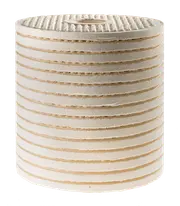
What is fine filtration?
Fine filtration focuses on removing very small, solid particles from oil - including particles well below 10 microns that conventional full-flow filters often miss.
These fine particles:

Are responsible for the majority of abrasive wear

Accumulate in clearances between moving parts

Act as catalysts for oxidation and sludge formation
By removing them continuously, fine particle filtration stabilizes system performance and protects critical components.

Clean Oil Is Not a Recommendation.
It Is a Reliability Strategy.
Understand contamination mechanisms, ISO codes, water control, and how to extend oil and component lifetime.

How fine particle filtration works
Fine particle filtration is performed using offline (kidney-loop) filtration, operating independently of the main oil flow to continuously clean the oil during normal operation.

Oil is diverted
A small portion of oil is continuously taken from the system.

Slow filtration
Oil flows slowly through a depth filter to maximise contact time.

Particles are captured
Fine and ultra-fine particles are trapped throughout the filter media.

Clean oil returns
Clean oil is returned to the system without interrupting operation.
Depth filtration vs. surface filtration
Depth filtration | Inline - pleated filter | |
|---|---|---|
Energy Consumption
| Captures particles throughout the thick filter media – like inside a large labyrinth | Captures particles mainly on the surface plus a bit in the thin filter media |
Maintenance
| Highly effective for fine and ultra-fine particle removal, since each fiber experience very low pressure and no pressure pulses | Limited efficiency for very small particles, since each fiber experience high pressure and pressure pulses |
Waste Generation
| High dirt holding capacity ensures long service life | Limited dirt holding capacity results in fast saturation and filter replacement |
Heating | Low ROI with stable filtration performance over time | Poor ROI since performance drops fast as filter loads |
Depth filtration is the key reason fine particle filtration delivers consistent oil cleanliness and reliable system protection.
Proven technology. Measurable performance.
Benefits of fine particle filtration
Fine particle filtration directly supports higher uptime and lower total cost of ownership.
Reduced abrasive wear on components
Longer oil and component lifetime
Fewer unplanned shutdowns
Lower maintenance and repair costs
Improved reliability and predictable operation
Fine particle filtration in practice
Fine filtration is used across industries where reliability is critical, including:
Gearboxes and hydraulic systems
Turbines and compressors
Engines and lubrication systems
Offshore, marine, wind, mining, and industrial applications
How an Oil Filter Works in an Offline Filtration System
Solid Particles and Abrasive Wear:
Solid particles are transported with the oil flow and become trapped between moving metal surfaces. These particles are often similar in size to the clearances inside bearings, pumps, and valves. Once wedged between components, they damage metal surfaces and generate millions of new particles - creating a self-reinforcing wear process.
Oil Degradation and Varnish Formation:
As oil degrades due to heat, pressure, and contamination, oxidation by-products form. These degradation products can dissolve in warm oil but later precipitate as varnish on cooler surfaces. Varnish creates sticky layers that trap particles, forming a sandpaper-like surface that dramatically increases wear and can cause valves to stick or seize.
Water Contamination and Micro-Pitting:
Water is another major threat to oil systems. Even small amounts reduce lubricity and load-carrying capacity. Under high pressure - such as in bearings and gears, water droplets collapse, causing micro-pitting on metal surfaces. Over time, this leads to corrosion, fatigue, and premature component failure.
Part of the Clean Oil approach
Fine particle filtration is one element of a complete clean oil strategy.
When combined with:
Water removal
Removes free and dissolved water from oil to prevent corrosion, cavitation, and premature component failure.
Oxidation and sludge control
Removes oxidation by-products and sludge to keep oil stable, systems clean, and performance predictable.
Acidity reduction
Reduces oil acidity to protect components from corrosion and extend oil and equipment lifetime.
it ensures optimal oil condition, maximum equipment protection, and long-term system reliability

Fine filtration solutions from C.C.JENSEN
Fine particle filtration is delivered through dedicated fine filter units designed for continuous offline operation.
These systems are engineered to remove damaging particles without disrupting normal system performance.