
Replace Your Centrifugal Separator And Get Up To 2% CII
Improvement
CJC® Engine Lube Oil Filtration for 2- and 4-stroke marine engines. Reduce separator energy use, improve CII by up to 2%, and support IMO decarbonization targets.
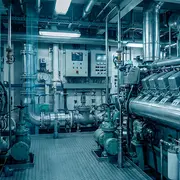
PROTECT UPTIME AND REDUCE MAINTENANCE PRESSURE
Why shipowners are switching now
Replacing a traditional centrifugal separator with CJC® offline filtration reduces unnecessary energy demand and helps keep engine lube oil in better condition. That can mean less sludge, less oil consumption, longer oil and component life, and stronger operational reliability.
With tightening CII requirements, EU ETS costs, and FuelEU Maritime penalties, small efficiency gains now have measurable commercial value. Cleaner lube oil reduces internal engine drag, eliminates separator power demand, and helps operators improve fuel performance without major retrofit complexity.
Replace Your Centrifugal Separator And Get Up To 2% CLL Improvement
CJC® Engine Lube Oil Filters reposition lube oil treatment as an operational efficiency lever, helping reduce auxiliary energy use, sludge burden, oil consumption, and maintenance pressure while supporting stronger vessel performance.
PROTECT UPTIME AND REDUCE MAINTENANCE PRESSURE
Cleaner Lube Oil Translates Into Lower Operational Drag Across Marine Engine Systems
Replacing a traditional centrifugal separator with CJC® offline filtration reduces unnecessary energy demand and helps keep engine lube oil in better condition. That can mean less sludge, less oil consumption, longer oil and component life, and stronger operational reliability.
Framed through the wireframe logic of the reference page, this section now behaves like the core operating narrative: why the problem matters, what the filtration change does, and why it deserves a technical and commercial review now.
CII PERFORMANCE
Real World
CII Rating Comparison
Based on 2024 data from a 46,921 DWT MR Tanker (MAN 6S 50MC-C, 11,640 kW) running on HFO. The CJC® filter delivers consistent CII improvements across all trading scenarios - in many cases shifting the vessel from a D to a C rating, or from C to B.
Consumption: 23.6 MT/day at sea (13 kn) • 5.25 MT/day at port
SAILING DAYS / YEAR | 100 | 115 | 130 | 140 | 150 ★ | 165 | 180 |
|---|---|---|---|---|---|---|---|
CII - With Centrifuge | D | D | C | C | C | C | b |
CII - With CJC® Filter | D | C ▲ | C | C | C | B ▲ | B |
FOC Savings (MT/yr) | 100.5 | 94.9 | 89.4 | 85.7 | 81.9 | 67.4 | 70.8 |
FOC Reduction % | 2.68% | 2.36% | 2.08% | 1.91% | 1.76% | 1.54% | 1.36% |
Imagine your entire fleet
Tonnes Co2 / year
Installing CJC® across a fleet of just 40 vessels eliminates over 10,000 tonnes of CO₂ annually - while drastically cutting fuel costs and compliance risk.
WHY SWITCH
Eight Reasons
To Switch Today
2%
CII rating improvement - move up a rating band
97%
Energy savings versus traditional centrifugal separator
97%
CO₂ reduction from filter energy consumption
60%
Less lube oil consumption per operating year
99%
Lube oil sludge reduction - less waste handling
↑
Increased oil & engine component lifetime
↑
Increased operational reliability & vessel availability
↓
Reduced maintenance costs and unplanned downtime
CUSTOMER CASE
MR TANKER:
255 TONNES CO2
SAVED PER YEAR
ANNUAL SAVINGS - 150 SAILING DAYS
Power consumption saved
639.91 MWh/yr
Fuel for energy saved
81.94 MT/yr
Main engine LO reduction
27.16 %
Aux engine LO reduction
51.20 %
Centrifuge desludge saved
3,247 ltr/yr
Sludge production reduction
11,122 ltr/yr
Annual CO₂ savings
255 t CO2
PAYBACK BY TRADING AREA
Including EU ETS Allowance and FuelEU Maritime savings where applicable.
Between EU/EEA & non-EU/EEA Ports
Annual savings incl. ETS
Payback: 0.58 year
$83K
Within EU/EEA Ports
Annual savings incl. ETS + FuelEU
Payback: 0.01 year
$105K
Outside EU/EEA Ports
Annual savings (fuel only)
Payback: 0.60 year
$61K
FLEET IMPACT
IMAGINE YOUR ENTIRE FLEET
tonnes CO2 / year
Installing CJC® across a fleet of just 40 vessels eliminates over 10,000 tonnes of CO₂ annually - while drastically cutting fuel costs and compliance risk.
OEM APPROVALS
MANUFACTURER-
APPROVED TECHNOLOGY
MAN ENERGY SOLUTIONS
No Objection Letter issued for CJC® fine filters (Types 27/-, 427/-, 2×427/-, 3×427/-) with LOX filter elements. Valid for two-stroke and four-stroke engines across all fuel types.
— NO OBJECTION LETTER - 2 & 4-STROKE ENGINES
WINGD
No Objection Letter issued following a 4,000-hour validation test aboard Eleonora Maersk (14RT-flex96C-B, HSFO). Approved for WinGD X, RT-flex, Wärtsilä RTA/RT-flex, X, and Sulzer 2-stroke engines on distillate, residual, and LNG fuels.
— 4,000-HOUR TEST - ELEONORA MAERSK • NOV 2024
Operational Risks
Why Separator Replacement Becomes a Commercial Issue, Not Just a Maintenance Issue

Unnecessary energy draw
Traditional separator operation adds avoidable auxiliary load at a time when every onboard efficiency gain matters.

Sludge and oil waste
Poor lube oil condition increases sludge handling, oil consumption, and the operational burden around treatment and disposal.

Maintenance cost pressure
Contaminated oil contributes to higher wear, more interventions, and a higher lifetime maintenance burden on critical equipment.

Availability and compliance risk
Lower system reliability and weaker efficiency performance make it harder to protect uptime while improving CII outcomes.
LET OUR EXPERTS HELP YOU DECIDE
Get a vessel-specific view of savings potiential, separator replacement logic, and likely operational upside.
LET OUR EXPERTS HELP YOU DECIDE
Get a vessel-specific view of savings potiential, separator replacement logic, and likely operational upside.
GET STARTED
CALCULATE VESSEL-SPECIFIC
FUEL, ETS, AND CII SAVINGS
Our marine specialists can model your savings based on engine type, sailing days, separator power consumption, and trading area.
WHY SWITCH
Why CJC Outperforms
Centrifugal Separators
3%
Energy use compared to a traditional centrifugal separator.
99%
Reduction in lube oil sludge and oxidation residue build-up.
2%
CO₂ reduction from filter energy consumption
60%
Potential CII improvement, enough to move up a rating band.
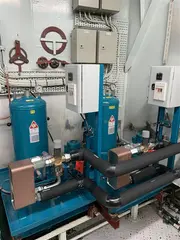
Application and use cases
How filtration works across systems
MAIN ENGINES
Reduce sludge formation, extend oil life, and support more stable engine lube oil condition in high-duty operating profiles.
Fleet decarbonisation programmes
Translate a technical filtration upgrade into fuel, CO2, and CII improvement logic that can be scaled across multiple vessels.
AUXILIARY ENGINES
Lower maintenance burden and improve reliability where continuous onboard support systems depend on predictable performance.
Vessel savings reviews
Use operating pattern, trading route, and separator setup to build a vessel-specific commercial case for replacement.
GET STARTED
CALCULATE VESSEL-SPECIFIC
FUEL, ETS, AND CII SAVINGS
Our marine specialists can model your savings based on engine type, sailing days, separator power consumption, and trading area.
