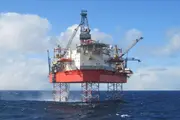
Reducing fuel waste and CO₂ emissions on a jack-up drilling rig
Replacing centrifugal fuel oil separators with offline filtration eliminated waste oil, reduced sludge and delivered significant fuel and emissions savings.
Case study written by Frank Peder Hansen, Øwre-Johnsen A/S, Norway
Application Snapshot

Industry:
Offshore

Country:
Norway

Oil type:
Marine Gas Oil (MGO)
Executive summary
As part of its sustainability initiatives, Seadrill sought to reduce fuel waste, CO₂ emissions and operating costs on a jack-up drilling rig. The existing centrifugal fuel oil separators generated large volumes of sludge and resulted in the loss of usable fuel.
By replacing the entire separator setup with CJC® Filter Separator units, the rig achieved substantial reductions in sludge production and fuel waste. Long-term operation confirmed lower maintenance requirements, improved working conditions and measurable environmental and financial benefits.

Fuel savings
52,560 litres of Marine Gas Oil saved annually by eliminating fuel losses from centrifugal separation.

Reduced wear and system complexity
Removal of heaters, purifiers and rotating equipment reduced vibration, noise and maintenance demand.

Avoided unplanned costs
Lower operating costs through reduced sludge handling, fewer components and simpler maintenance.

Lower environmental footprint
CO₂e emissions reduced by 86 tonnes annually through fuel and energy savings.

Improving fuel oil handling without separators
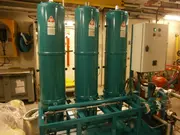
A 1-to-1 comparison test was conducted over 8,760 operating hours, running the CJC® Filter Separators in parallel with the previous centrifugal separator configuration.
Following the test period, the centrifugal system was completely removed. The CJC® solution delivered stable fuel oil cleanliness while eliminating waste oil, water discharge and the need for heaters and high-speed rotating equipment.
Measurable results and operational impact
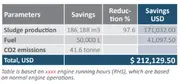
The CJC® Filter Separator solution delivered clear and documented improvements, saving 52,560 litres of fuel annually, equivalent to EUR 46,200, while reducing sludge production by 97.6% and cutting CO₂e emissions by 86 tonnes per year.
The system eliminated waste oil and water discharge entirely, while significantly simplifying maintenance. By removing heaters, purifiers and other rotating components, the installation improved working conditions on board, reducing noise, vibration and overall system complexity.
“Since we installed, there has been no more waste oil. We have ZERO water discharges. The upgrade has been a great success.”
– Antonis Iliopoulos, Project Manager, Seadrill
Let our experts help you
Get a tailored assessment of your oil condition
and keep your equipment running reliably
